
When you turn on your kitchen tap in Al Khawaneej 2, you probably don’t think much about the journey that water took to reach your glass. But here’s something worth considering: the water tank on your roof or buried underground plays a bigger role in your family’s health than you might realize.
Most homes in Dubai rely on stored water systems, and Al Khawaneej 2 is no exception. Whether you’re in a villa with an underground tank or a building with roof storage, that tank is essentially a holding area for all the water you use for drinking, cooking, and bathing. Over time, these tanks collect sediment, develop algae, and can harbor bacteria—even if your incoming water supply is perfectly clean.
Why Water Tank Cleaning Matters in Dubai’s Climate
Dubai’s intense heat creates the perfect environment for bacterial growth inside water tanks. When temperatures soar above 40°C during summer months, the water in your tank can warm up significantly, especially in roof-mounted systems that get direct sun exposure. Warm, stagnant water becomes a breeding ground for microorganisms.
Add to that the fine dust and sand particles that naturally circulate in Dubai’s air, and you’ve got sediment settling at the bottom of your tank. This sediment doesn’t just make your water cloudy—it can affect the taste, cause discoloration, and potentially impact your family’s health.
According to Dubai Municipality’s water quality standards, proper maintenance of water storage systems is essential for ensuring safe drinking water. The municipality recommends regular cleaning, and for good reason.
What Happens During a Professional Tank Cleaning
A proper water tank cleaning isn’t just about draining and refilling. It’s a systematic process that addresses contamination at every level.
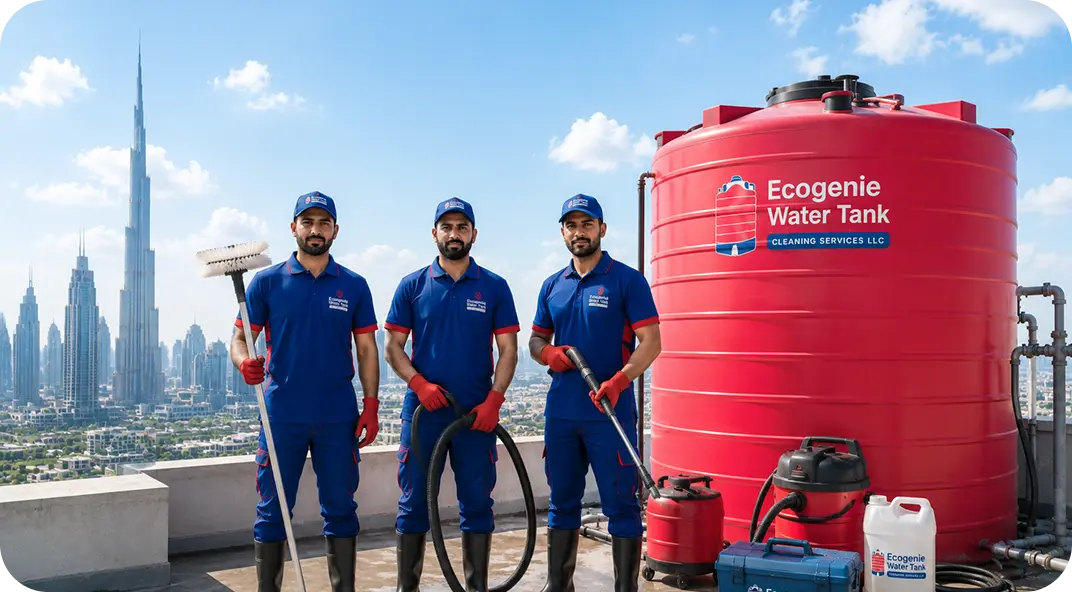
First, technicians examine your tank to assess its condition and identify any problem areas. They’ll check for cracks, rust, or structural issues that might need attention. Then comes the actual cleaning: using scouring pads and eco-friendly disinfectants, they scrub every surface—walls, floor, and ceiling of the tank.
The pressure washing phase removes stubborn buildup and biofilm (that slippery layer you might feel on tank surfaces). All contaminated water and sediment get pumped out and properly disposed of. The tank is then flushed multiple times to ensure no cleaning solution residue remains.
Finally, technicians verify that water quality is clear at all your taps before considering the job complete. The whole process typically requires shutting off your main water valve a day beforehand, and you’ll experience water interruption during the cleaning itself.
Understanding Your Tank Type and Cleaning Requirements
Not all water tanks are the same, and cleaning approaches vary based on location and capacity.
Underground tanks are common in Al Khawaneej 2 villas. They’re protected from direct sunlight, which helps keep water cooler, but they’re more prone to sediment accumulation and can develop issues if the tank walls aren’t properly sealed. Tanks ranging from 500 to 2000 gallons serve most residential properties.
Roof tanks face different challenges. Direct sun exposure means warmer water and faster algae growth. However, they’re generally easier to access for maintenance. These typically range from 1000 to 2000 gallons for residential use.
Outdoor tanks are less common in residential settings but you’ll find them in some older properties or commercial spaces. They need protection from the elements and regular monitoring.
Signs Your Water Tank Needs Cleaning Now
You shouldn’t wait for obvious problems, but certain signs demand immediate attention. If you notice a change in your water’s taste or smell—especially a musty or earthy odor—that’s a clear indicator of bacterial growth or algae. Discolored water, whether it’s brown, yellow, or has a reddish tint, suggests rust or sediment issues.
Visible particles or sediment coming through your taps mean the bottom of your tank is compromised. Lower water pressure throughout your home might indicate sediment blocking your pipes. Some residents even report seeing small insects or larvae in their water—a serious health concern that requires immediate professional intervention.
Practical Maintenance Tips Between Professional Cleanings
While professional cleaning every six months is the gold standard, you can take steps to maintain water quality between services.
Keep the area around your tank clean and clear. For roof tanks, ensure proper insulation or shade where possible to minimize sun exposure. Check the tank’s inlet and outlet screens regularly to make sure they’re intact and functioning—these prevent debris and insects from entering.
If you notice your water pressure dropping gradually, it might be early sediment buildup. Don’t wait until the problem becomes severe. Also, pay attention to seasonal changes. Right after sandstorms, you might notice more sediment, so consider scheduling a cleaning if you’ve experienced several severe storms.
The Health Connection: Why Clean Water Storage Matters for Your Family
Clean water isn’t just about taste and appearance. Contaminated water tanks can expose your family to harmful bacteria like E. coli, Legionella, and various waterborne pathogens. Children and elderly family members are particularly vulnerable to these contaminants.
Think about all the ways you use that stored water: drinking, cooking, brushing teeth, washing produce, bathing. Even your pets drink from the same supply. Skin irritation, digestive issues, and respiratory problems can all trace back to contaminated water sources.
In Al Khawaneej 2’s family-oriented community, where many homes have young children and pets, maintaining clean water storage isn’t optional—it’s essential preventive health care.
Services That Complement Water Tank Cleaning
Water tank cleaning works best as part of a comprehensive home maintenance approach. Your air conditioning system, for instance, also involves water drainage and can develop similar contamination issues if neglected. Regular AC cleaning prevents moisture buildup that attracts pests and creates unhealthy air quality.
Deep cleaning of bathrooms and kitchens addresses water-related issues at the point of use, tackling limescale buildup and biofilm in fixtures. If you have a water filtration system installed, those filters need regular replacement to remain effective.
Pest control services also complement tank cleaning because clean, properly sealed tanks are less attractive to insects and rodents that might otherwise contaminate your water supply.
What to Expect: The Cleaning Process Timeline
The duration of tank cleaning depends on size and condition. A standard 1000-gallon underground tank typically takes 4-6 hours from start to finish. Larger 2000-gallon systems might need 6-8 hours.
Plan accordingly for the water interruption. Fill some containers with water the day before for essential needs during the cleaning. The team will coordinate with you on timing to minimize disruption to your daily routine.
After cleaning, it’s normal for the first few minutes of water to have a slight chlorine smell from the disinfection process. This dissipates quickly as you run your taps.